


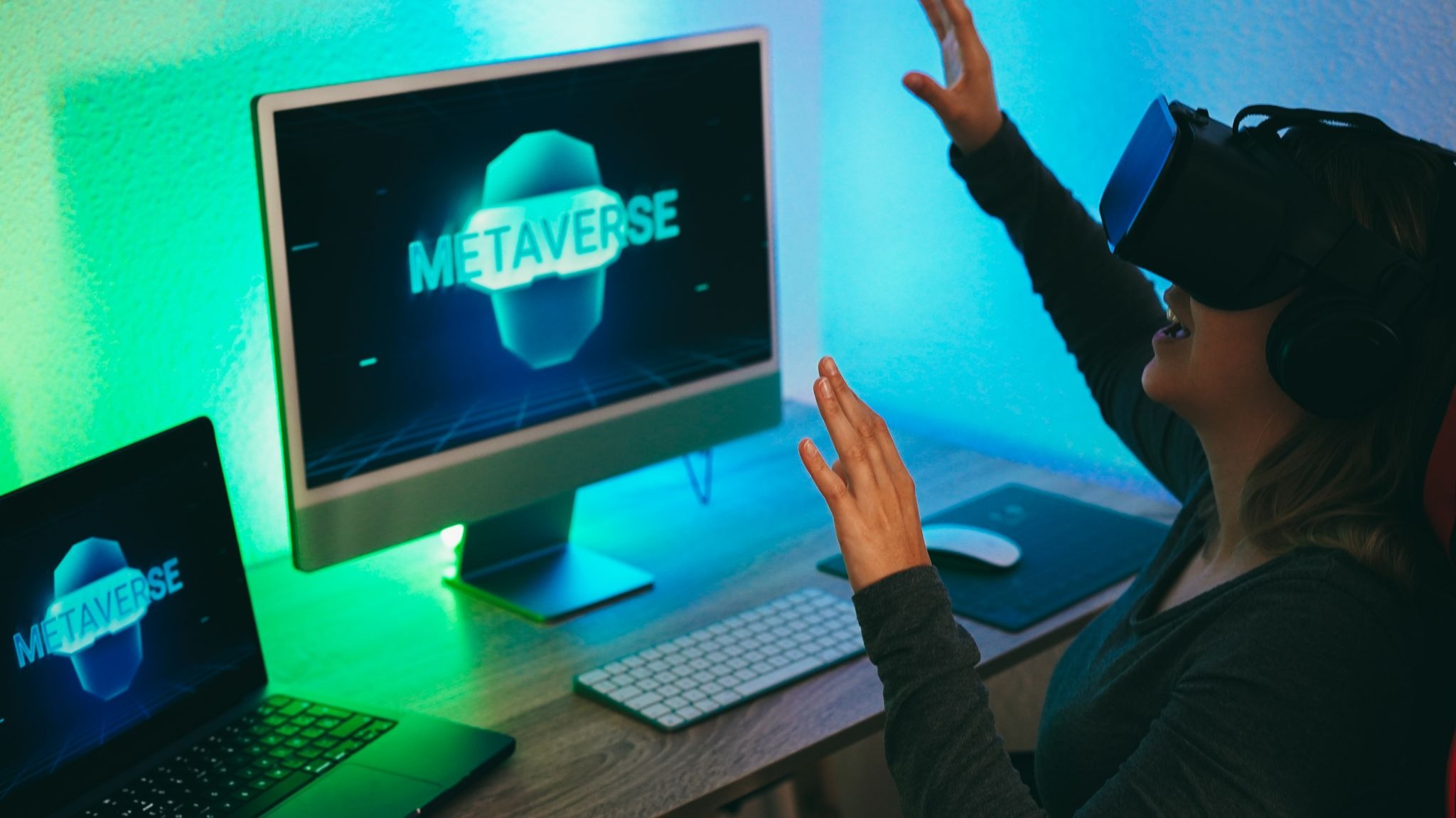
The metaverse is no longer science fiction. It’s becoming a real digital space where people work, play, socialize, and trade. Yet many still struggle to understand how it actually works.
This is where blockchain comes in. To truly grasp the future of virtual worlds, you need a clear explanation of the technology behind them. This guide breaks down metaverse technology explained in simple language. We’ll explore how the blockchain metaverse enables ownership, powers virtual economies, and shapes open Web3 worlds.
What Is the Metaverse?
The metaverse is a shared digital environment that exists beyond a single app or website. It’s persistent, interactive, and often immersive.
Unlike traditional online games or social platforms, metaverse worlds don’t reset when you log off. They continue to exist and evolve. Your identity, assets, and interactions remain part of that world.
Some metaverse platforms use virtual reality headsets. Others run on standard screens. What matters most is not the hardware, but the idea of a living digital space.
Key Components of Metaverse Technology
Metaverse experiences rely on several layers of technology working together.
Virtual environments provide the space. Avatars represent users. Real-time interaction allows people to communicate and collaborate.
Blockchain adds something new. It introduces ownership, trust, and decentralized control. Without blockchain, most metaverse platforms would remain closed ecosystems.
How Blockchain Powers the Metaverse
Blockchain acts as the backbone of decentralized virtual worlds. It records ownership, transactions, and rules without relying on a central authority.
In traditional virtual worlds, the platform owns everything. Your items exist only as long as the company allows them to. In a blockchain metaverse, ownership is recorded on-chain. This gives users control over their digital assets.
Blockchain also enables transparency. Anyone can verify transactions, asset supply, and economic rules.
Blockchain Metaverse vs Traditional Virtual Worlds
Centralized virtual worlds function like rented spaces. You play, but you don’t own. If the platform shuts down, your assets disappear.
In contrast, blockchain-based worlds allow true ownership. You can trade assets freely, move them across platforms, or hold them independently of the game.
This shift is fundamental. It changes virtual worlds from controlled environments into open digital economies.
Digital Ownership and NFTs in Web3 Worlds
Ownership is the heart of the blockchain metaverse. Non-fungible tokens, or NFTs, make this possible.
NFTs represent unique digital assets. They can be virtual land, wearables, avatars, or artwork. Each NFT is verifiable and owned by a specific wallet.
In Web3 worlds, NFTs give users control. You don’t just use items. You own them.
Use Cases of NFTs in Virtual Worlds
Virtual land is one of the most common NFT use cases. Owners can build experiences, rent space, or host events.
Wearables and avatars allow personalization and identity. These items can often be used across multiple platforms.
NFTs also protect creators. Artists and developers can earn royalties when assets are resold. This creates sustainable digital economies.
Virtual Economies and Token-Based Systems
Every functioning metaverse needs an economy. Blockchain makes these economies transparent and programmable.
Virtual economies use tokens as a medium of exchange. These tokens reward participation, enable trade, and align incentives.
Unlike in-game currencies controlled by companies, blockchain-based tokens operate under fixed rules. Supply, issuance, and usage are visible to everyone.
How Users Earn and Spend in Blockchain Metaverse Platforms
Many platforms use play-to-earn or create-to-earn models. Users earn tokens by contributing value, not just time.
Creators sell digital goods. Players trade assets. Communities fund development.
These systems blur the line between users and builders. Everyone becomes part of the economy.
The Role of Web3 in Building Open Virtual Worlds
Web3 represents a shift away from centralized control. In Web3 worlds, users own assets, data, and identities.
This matters for the metaverse. Without Web3 principles, virtual worlds remain locked ecosystems.
Decentralization allows communities to govern platforms together. It also encourages innovation by removing gatekeepers.
Interoperability Across Web3 Worlds
One of the biggest promises of the blockchain metaverse is interoperability.
In theory, assets should move across platforms. Your avatar, items, or identity shouldn’t be trapped in one world. While this vision isn’t fully realized yet, open standards are making progress. Interoperability could define the next phase of metaverse growth.
Real-World Applications of Metaverse Technology
The metaverse is not just for gaming. Its applications extend far beyond entertainment.
Businesses use virtual spaces for meetings and collaboration. These environments feel more engaging than video calls.
Education platforms use immersive simulations for training. Students learn by doing, not watching.
Retail brands experiment with virtual stores. Users explore products in interactive spaces before purchasing.
As technology improves, these use cases will become more practical and accessible.
Challenges Facing the Blockchain Metaverse
Despite its potential, the blockchain metaverse faces real challenges.
Scalability remains a concern. Blockchains must handle high transaction volumes without high fees.
User experience is another barrier. Wallets, keys, and onboarding still feel complex for newcomers.
Security and regulation also matter. As virtual economies grow, they attract scrutiny and risk.
These challenges are real, but they are not insurmountable.
The Future of Metaverse Technology and Blockchain
The metaverse is still early. Many platforms are experimental. Standards are evolving.
Advances in blockchain scalability will support richer virtual economies. Better hardware will improve immersion.
Most importantly, users are learning what they want. The metaverse will not be built by technology alone. It will be shaped by communities.
Blockchain ensures those communities have a voice.
Conclusion
Understanding metaverse technology explained requires looking beyond visuals and hype. The real transformation happens behind the scenes. Blockchain gives virtual worlds ownership, trust, and economic freedom. It enables virtual economies that reward participation. It supports open Web3 worlds where users matter. The metaverse is not one platform. It’s a growing network of digital spaces. Blockchain is what makes that network possible.
FAQs About Metaverse Technology Explained
1. How does blockchain improve the metaverse?
Blockchain enables ownership, transparency, and decentralized control. Users truly own digital assets instead of renting them.
2. Are all metaverse platforms decentralized?
No. Many are still centralized. A true blockchain metaverse uses decentralized infrastructure and on-chain ownership.
3. What role do tokens play in virtual economies?
Tokens act as currency, incentives, and governance tools. They power transactions and reward participation.
4. Is the metaverse only about gaming?
No. Gaming is popular, but education, work, commerce, and social interaction are growing use cases.
5. Do you need crypto to use the metaverse?
Not always. Some platforms abstract blockchain elements, but ownership features usually rely on crypto wallets